Homeowners watching the national headlines could be forgiven for expecting the worst. Nationally, property values fell 0.7% in July — the sharpest monthly drop since the end of 2022 — and the falls are steepest in the two biggest cities: over the past year Sydney is down about 2.0% and Melbourne about 2.8%, with both easing more than a per cent again in July alone. On 11 August the Reserve Bank held the cash rate at 4.35% and noted that “momentum in the housing market has shifted, with housing prices falling in some capital cities.”
That downturn is largely a Sydney and Melbourne story, but it is no longer only theirs. Brisbane values slipped 0.6% in July, and the Gold Coast’s own median eased 0.3% in June — its first fall in about four years. Against that backdrop, Robina has held its ground on price: houses are worth 5.8% more than a year ago. What has changed is how long they take to sell.
Homes are taking longer to sell
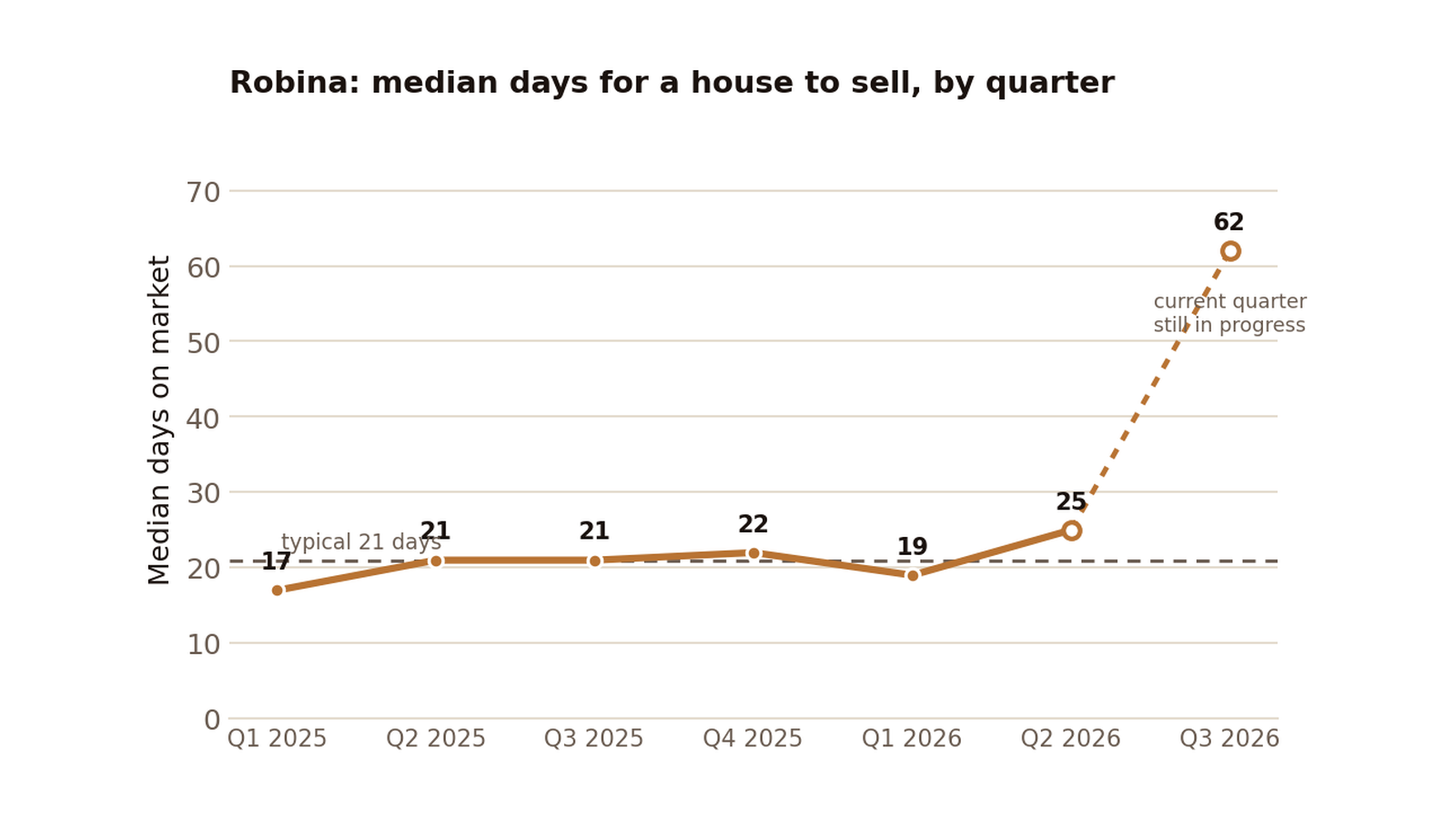
In the June quarter — the most recent complete one — the median Robina house took 25 days to sell, against 21 days a year earlier: four days longer, and still close to the suburb’s typical 21-day pace. The clearer signal is more recent. Across the three months to the end of August the median stretched to 50 days, on 31 sales, and the current quarter — still filling in as settlements register — is running slower again, at a median near 62 days on its first 22 sales. On those small, recent samples the direction is up; the completed quarters do not yet show it.
The quick-sale share tells the same story with the same caveat. In the June quarter 58% of Robina houses sold within thirty days, down from 70% a year earlier; across the full twelve months the figure is 57%. It is the still-forming current quarter, not the completed ones, that is tracking sharply lower.
Median days for a Robina house to sell, by quarter. Completed quarters have held near the low-to-mid twenties, close to the typical 21 days; the dotted final point is the current quarter, still in progress on its first 22 sales.
Read it in context: Robina was unusually fast a year ago
A slowdown from a normal pace and a slowdown from an unusually hot one are different things, and any recent lengthening here is the second. Through the first half of 2025 the median Robina house was selling in the high teens to low twenties of days — 17 in the March quarter, 21 in June. At 25 days in the latest complete quarter the market is essentially back on its normal footing; it is the most recent weeks, not the completed quarters, that carry any sign of a longer campaign — and on a sample too small to lean on yet.
Two forces sit behind it. Robina has had a strong run — up 5.8% over the year and 130.8% over the decade — and after fast growth, buyers tend to weigh value more carefully. And there is a cheaper, faster-selling alternative close by: Varsity Lakes, six kilometres south, costs about $398,000 per bedroom against Robina’s $426,000, and is clearing homes above asking. Whether buyers are actively substituting one for the other cannot be measured from sales data alone, but Robina’s slower pace is consistent with a value-conscious buyer looking south.
What a longer campaign means
A longer median campaign is not the same as homes failing to sell. In the completed June quarter the share of Robina houses taking more than ninety days to sell stayed under 3% — very little is sitting unsold. A longer campaign is what price discovery looks like when buyers are more selective: more homes are meeting the market after a few weeks rather than in the first days. And time on market moves before price does — a seller’s first response to a thinner buyer pool is to wait rather than discount — which makes it an early read on where a market is heading.
Price has held while the clock has stretched
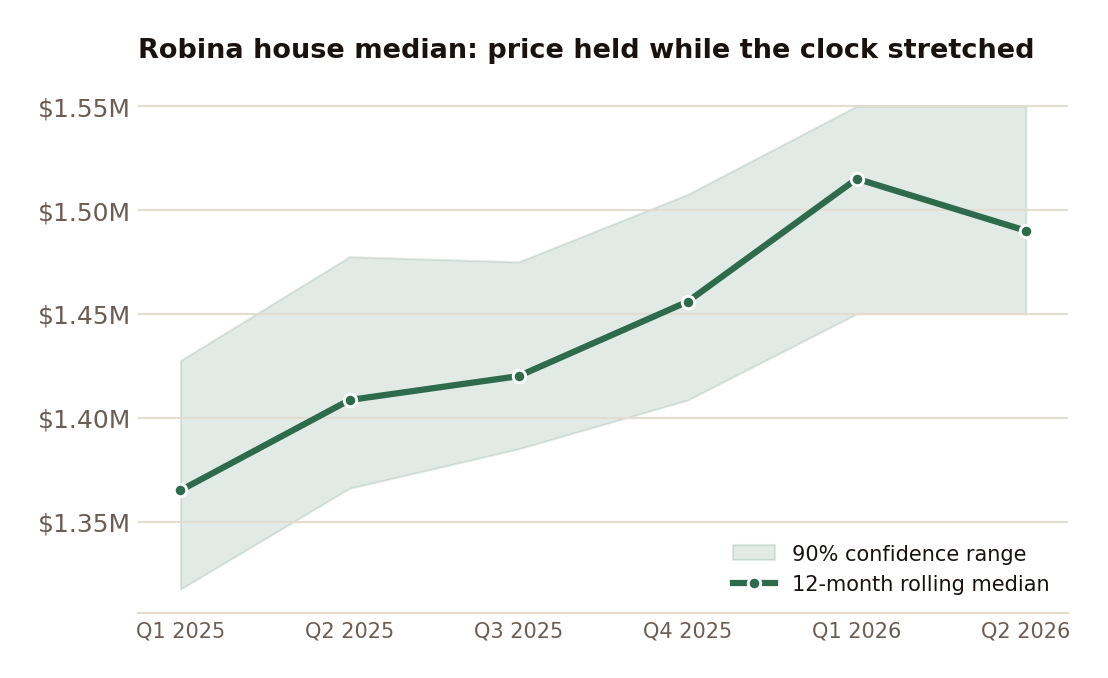
Over the twelve months to August, the median Robina house sold for $1,490,000, up 5.8% on the year before, when it was $1,408,500. That figure rests on 265 sales with a margin of 4.0%, placing the true middle between $1,450,000 and $1,550,000.
The three-month view has held broadly flat — drifting around $1,500,000, dipping to about $1,440,000 mid-year and recovering toward $1,470,000 since, all within the range where the movement cannot be separated from noise. So Robina’s price has held while the time to achieve it has stretched — the pattern of an early-stage shift, where the time series moves first and price follows later, if at all.
The twelve-month rolling median with its 90% confidence range: price has held around $1.49M while campaigns lengthened.
Supply is not the pressure
Robina currently has 110 homes advertised — 54 houses and 56 attached dwellings. At the current rate of sale that stock would clear in 2.18 months, against 1.77 in Varsity Lakes and 3.57 in Burleigh Waters. Four months is generally treated as balanced, so Robina sits on the tight side of it. Unsold stock is not accumulating — the overhang that turns slower sales into falling prices is absent — and homes that sell are still achieving 0.4% above asking on average.
On the street
Across Robina’s forty-eight house sales since April, most cleared within their comparable range, campaigns lengthened, and a minority still sold fast and above estimate. Three sales mark out that spread. (Days run from first listing to sale.)
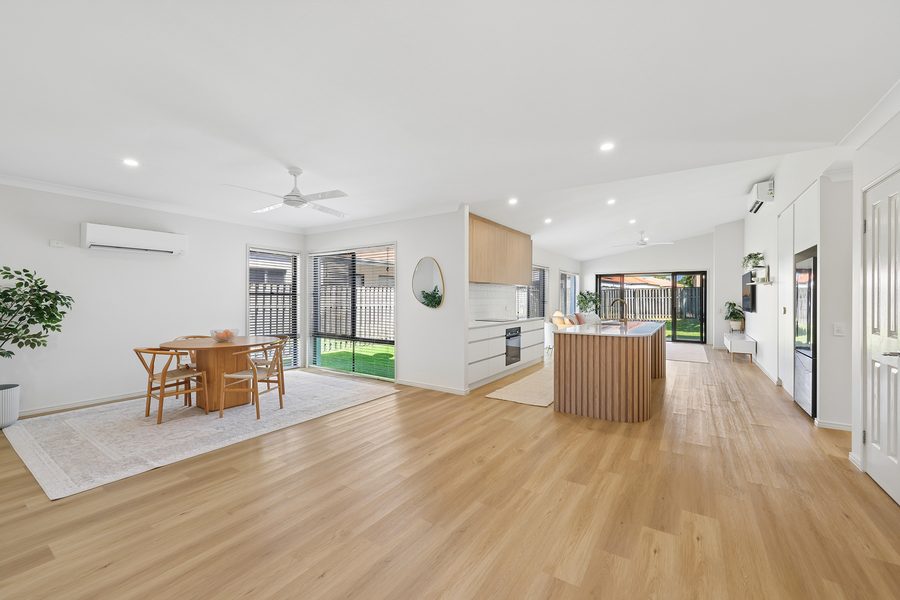
41 Olympus Drive, Robina — sold $1,395,000 after about 100 days.
41 Olympus Drive, a four-bedroom home, sold for $1,395,000 after about 100 days. The asking price held at $1,449,000 through six re-wordings of the advertisement across June and July before it sold $54,000 under — a good home, fairly priced, that took a few months and a small adjustment to meet the market.
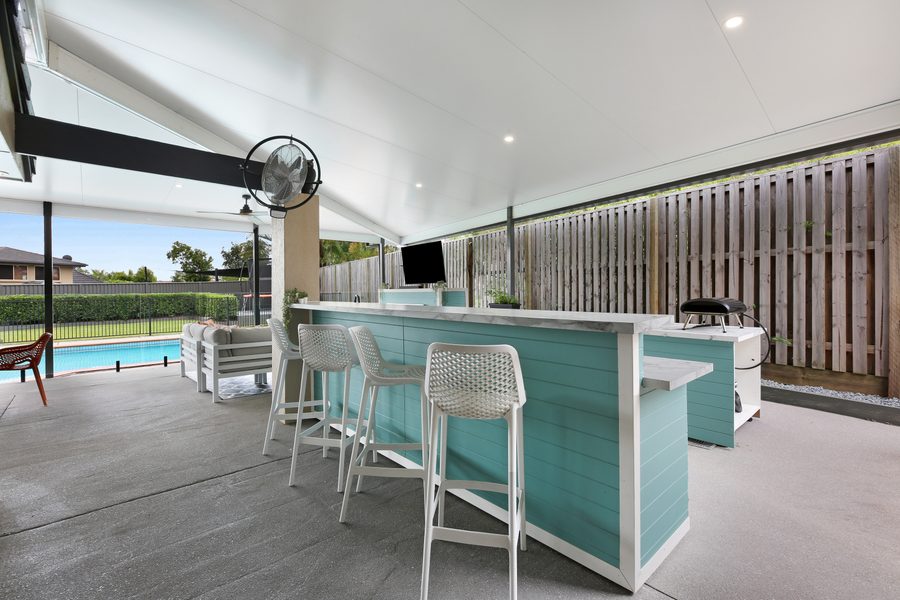
16 Collingwood Avenue, Robina — sold $1,700,000 after about 127 days.
16 Collingwood Avenue, also four bedrooms, took longer — about 127 days — and sold for $1,700,000, within range. The patient end of the market.
13 Ripponlea Street, Robina — sold $1,350,000 in seven days, above range.
13 Ripponlea Street, a three-bedroom home, ran the other way: it sold in 7 days for $1,350,000, above the top of its comparable range. Even in a slower quarter, the right home clears fast — the minority now, where a year ago it was closer to the rule.
Units and townhouses are a separate market
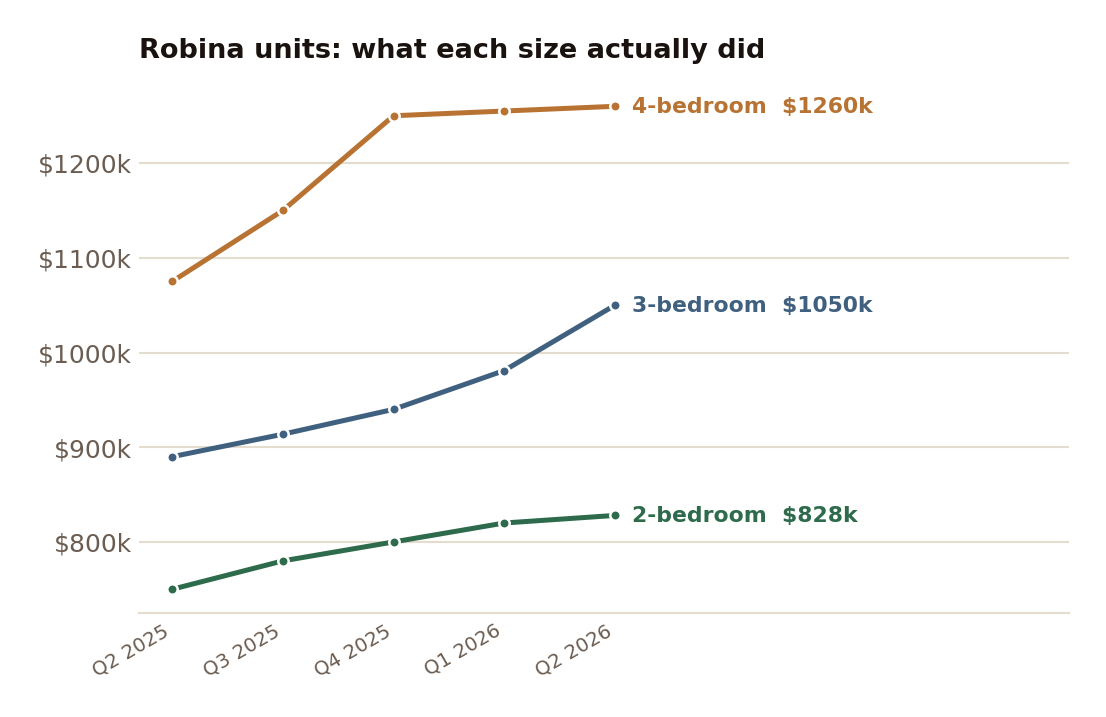
Attached dwellings in Robina — units, townhouses and villas — reached a twelve-month median of $990,000 and sell faster than houses. The headline growth of 13.8% reflects which sizes changed hands; the clearer read is by bedroom, for the twelve months to June:
One bedroom — $710,000
Two bedrooms — $828,000
Three bedrooms — $1,050,000
Four bedrooms — $1,260,000
Robina attached dwellings by size, twelve-month rolling median — the figures behind the 13.8% headline.
Two figures we are leaving out
Robina’s June-quarter house median came from 51 sales, against 71 the quarter before; compared directly they imply a fall of nearly ten per cent. At those sample sizes the difference cannot be separated from chance, so the twelve-month figure of $1,490,000 is the reliable one. Sales volume is also absent here: two transaction series disagree on the direction of activity, so neither stands as a level.
The longer view
Robina house prices have risen 130.8% since the September quarter of 2016, when the median was $650,000. Against that decade, a completed quarter in which homes took four days longer to sell than a year earlier is a small movement — and the sharper lengthening in the most recent weeks still rests on weeks of data, not quarters. Whether it is the start of a broader shift or noise in a thin sample is not yet clear from the data. In July, the country’s most hawkish major bank reversed its interest-rate call within three weeks; forecasting the next quarter of prices is a mug’s game, and this update does not attempt it.
Sources: Fields Estate transaction data for Robina, twelve months to 2 August 2026, compiled from public sale records. Days-on-market uses the days_on_market field, as published on the Robina Market Intelligence page (Should I Sell Now), and is current to the end of August 2026; the current-quarter figure is an in-progress sample. National and regional context: Cotality Home Value Index July 2026; PropTrack, June 2026; Reserve Bank of Australia media release 2026-19, 11 August 2026. Sample sizes and confidence intervals are published on the Robina Market Intelligence page. Listing counts as at 20 August 2026.
Keep reading:Robina market data — prices, supply and selling times, updated as new sales settle.
Licensed Queensland real estate agent, founder of Fields Real Estate and Lead Analyst at Fields Research. Covering Gold Coast market data, comparable sales analysis and suburb intelligence.
Where does your own home sit?
Fields keeps a record of every active listing and recent sale across the southern Gold Coast, and reads any address against the sales around it — the comparables, the range they support, and the method behind it. This analysis of the Gold Coast comes from the same database.